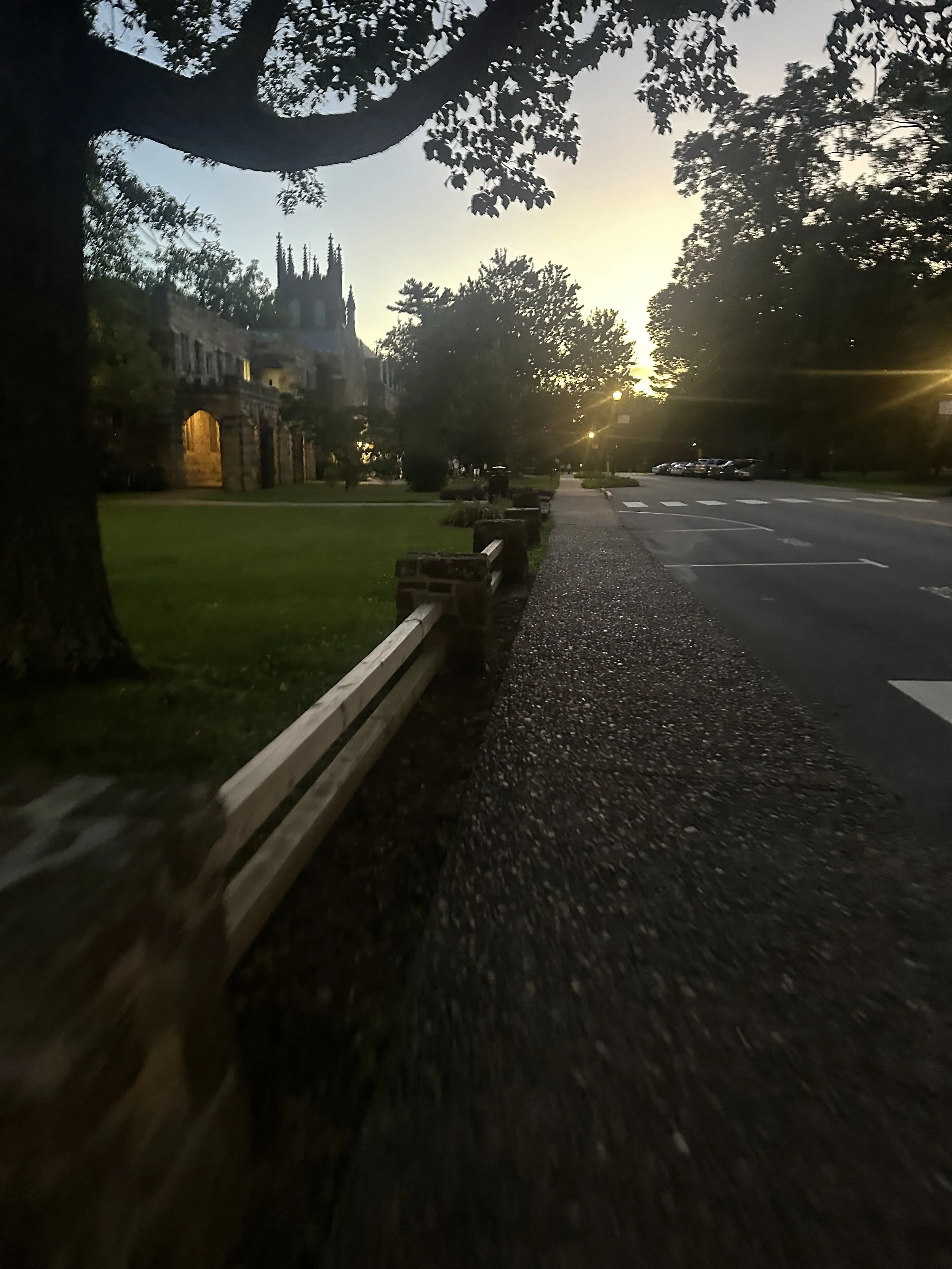
There are conferences, and then there are experiences that recalibrate something in you. The Sewanee Writers' Conference — held on the stunning campus of the University of the South in Sewanee, Tennessee — has been the latter. I arrived as a playwright with a first draft and a lot of questions. I'm leaving with a clearer sense of direction and a group of writers I hope to know for the rest of my life.
I'm here thanks in part to a grant from the Metropolitan Arts Council of Greenville, South Carolina, and I want to say plainly: this would not have been possible without their support. MAC invests in artists so artists can do the work. I hope this post is some small evidence of what that investment looks like in practice.
The conference brings together writers of fiction, nonfiction, poetry, and playwriting for two intensive weeks of workshops, craft talks, readings, and — if you're lucky — karaoke and a ghost walk. (The ghost walk was billed as funny. It was funny. It was also genuinely terrifying in a way I was absolutely not prepared for.)
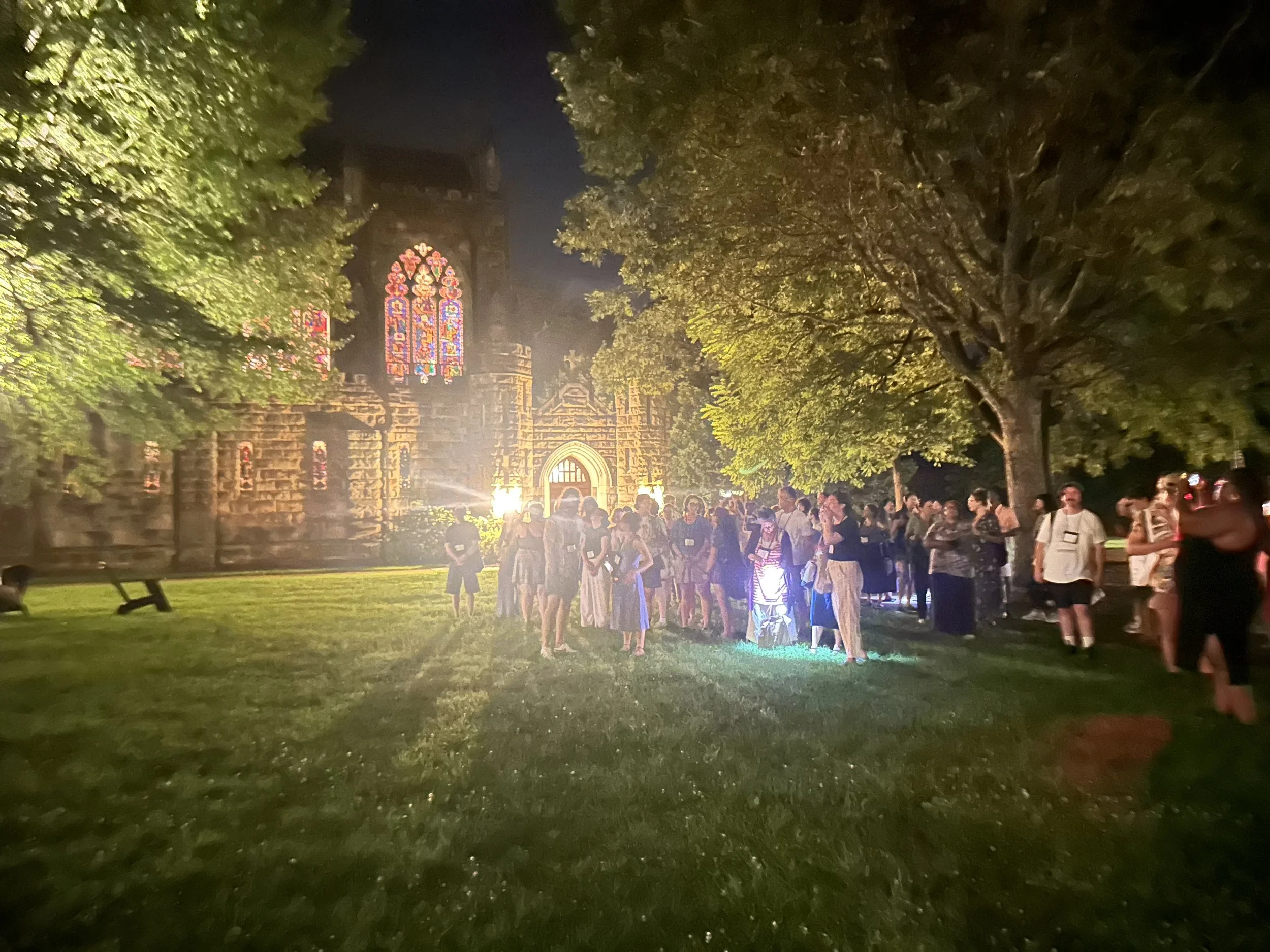
The ghost walk…
The playwrights here have been lovingly dubbed "the cool kids" by our fiction, non-fiction, and poetry peers — maybe because we tend to cluster together and laugh loudly. We don't usually get included alongside other literary genres at conferences like this; we're typically with other theatre artists. So there's something quietly wonderful about being in this particular room, at this particular table. We're not sure we deserve the cool kids title, but we are absolutely hoping the myth persists.
My workshop has been led by playwrights Nathan Davis and Brittany K. Allen, whose combined energy can only be described as Zen — thoughtful, generous, and genuinely curious. The atmosphere they've created has made it a joy to sit with my peers' plays and try to serve them well. That spirit of mutual championing has been the heartbeat of these two weeks. Nobody is competing. Everyone is just trying to help each other write the best possible version of the thing they're trying to write.
My play, The Longest Walk, was workshopped near the end of the residency. Two professional actors read a ten-page excerpt aloud — and they fell into the roles easily, which felt like its own kind of confirmation. The play's subject matter is intense and the form is unconventional, and the fact that the room got it — really got it — meant everything. I didn't leave with a list of fixes. I left with something richer: thoughtful reflection on the ways the play was already working emotionally. People felt it in their bodies. One person said she'd been holding her breath throughout, because death felt so imminent as a presence in the play. They responded to the idiosyncratic dialogue, to the characters, to the way the monologues provide counterpoint to the fast-paced scenes. They were already imagining the design.
The workshop also surfaced something I'll be sitting with as I head into the next draft. The room connected most strongly with Fee — and I think I know why. Fee carries the internal monologues, and whoever holds the interiority tends to hold the audience's heart. I've been working hard to make Fee an equal player to Mags, and in some ways the workshop confirmed I've succeeded — maybe more than I realized. But it's also sent me back to a question I now need to answer on the page: does Mags need her own moments of interiority? Her own way of opening her inner life to the audience? That's the work ahead. And honestly, leaving a workshop with the right question is the best possible outcome.
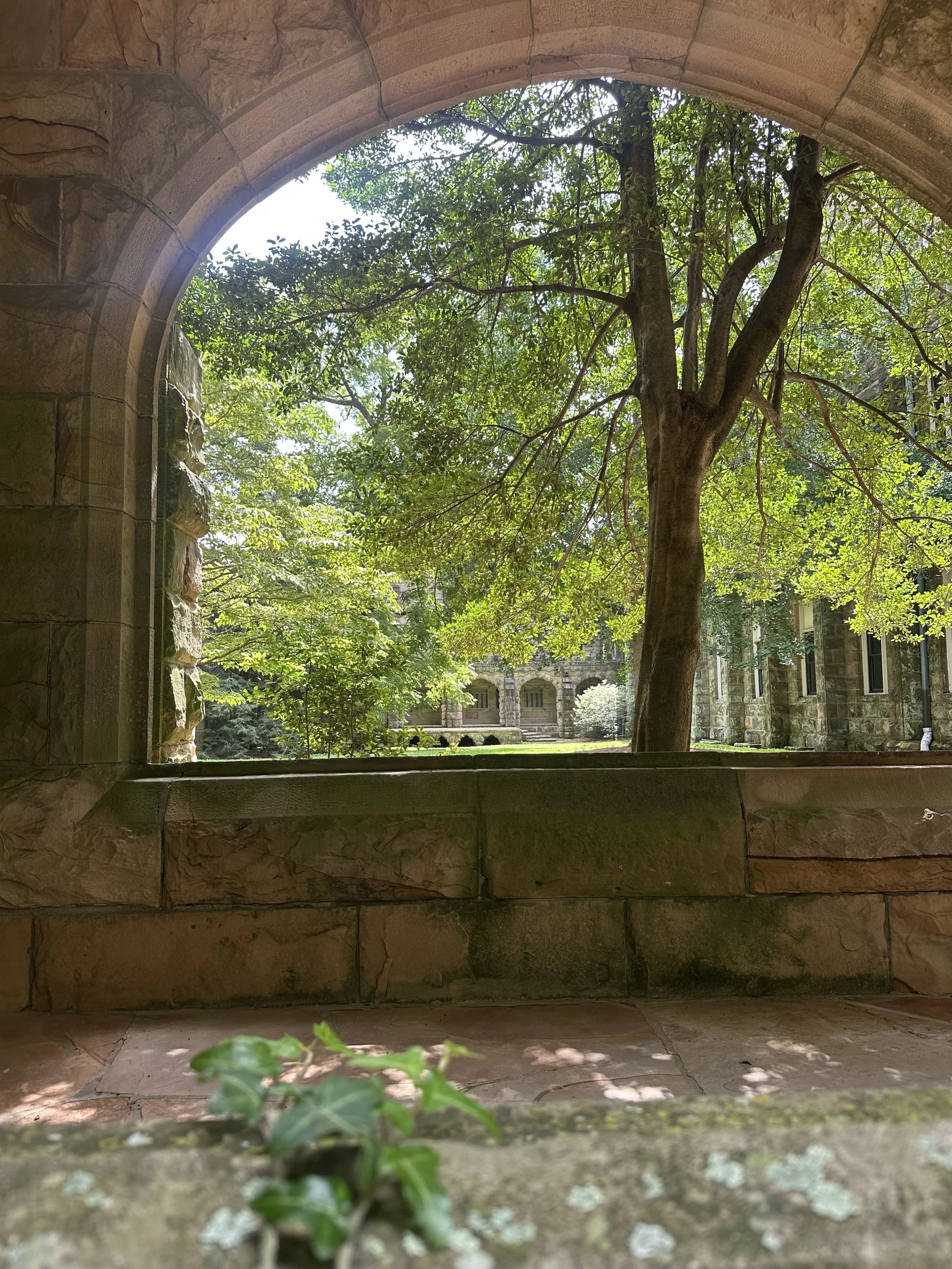
Image I captured from the writing and photography class
Beyond the workshop room, the conference offered something I didn't fully anticipate: access. Special topics sessions with TV writers, agents, and artistic directors from organizations like Playwrights Realm, Ars Nova, and the Playwright's Center gave me a clearer picture of the landscape I'm navigating — and, more importantly, reminded me that the people who run those organizations are just people, having honest conversations about the work. Some industry guests couldn't make it due to extreme weather in the Northeast, but I'll be meeting with them via Zoom in the coming weeks. The conversations aren't over; they're just moving to a different mountain.
And then there were the moments I'll be talking about for a long time. I met Anne Washburn and Lauren Yee — two playwrights whose work has genuinely shaped how I think about what theatre can do. I asked them both to sign my books in what I can only describe as the most awkward possible way. They were gracious. I was a disaster. I regret nothing. Anne's new play had a reading here this week that was, simply, riveting — the kind of theatre that makes you want to go home and write.
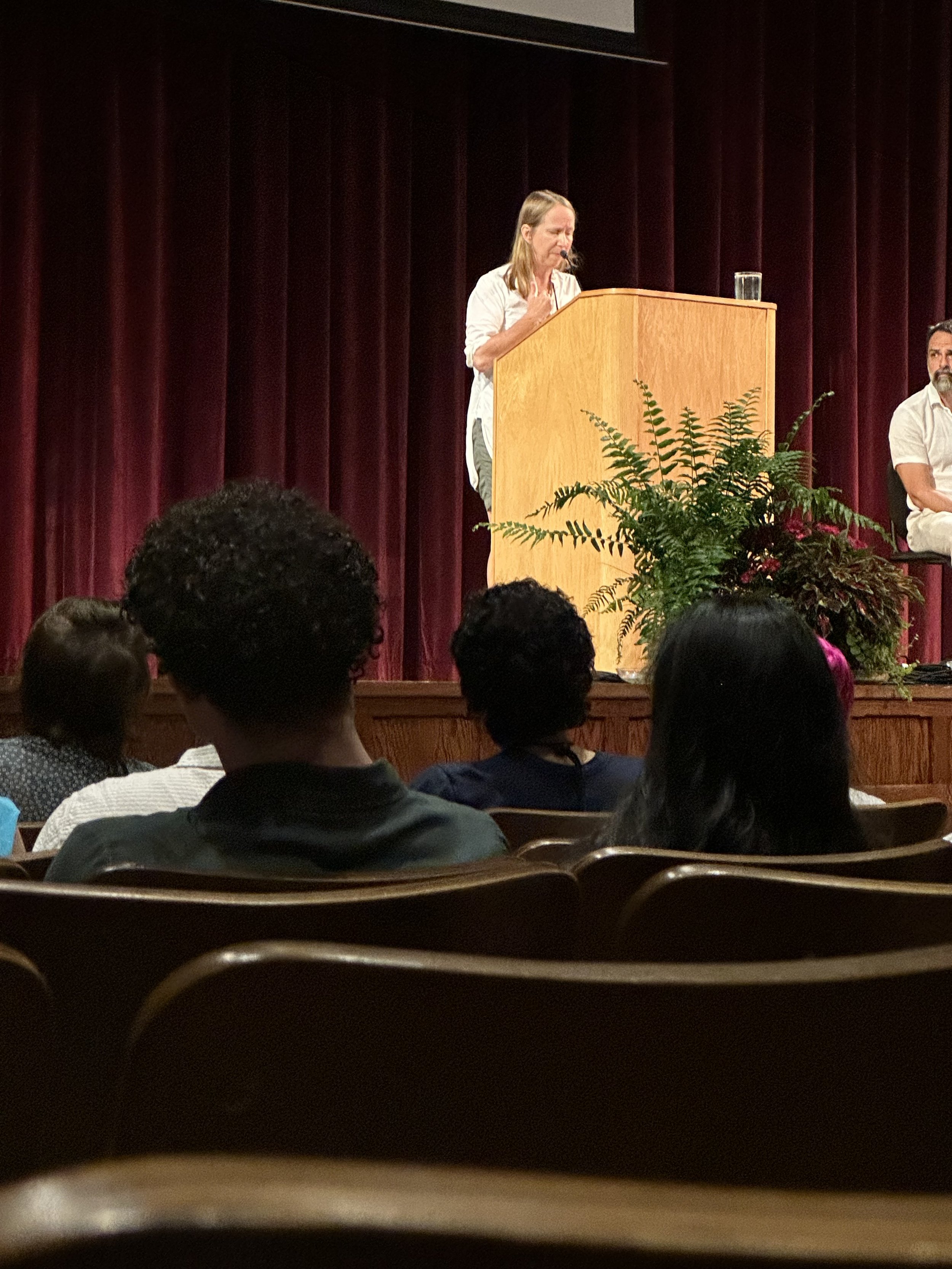
Anne Washburn giving a riveting reading of her new play, Anon
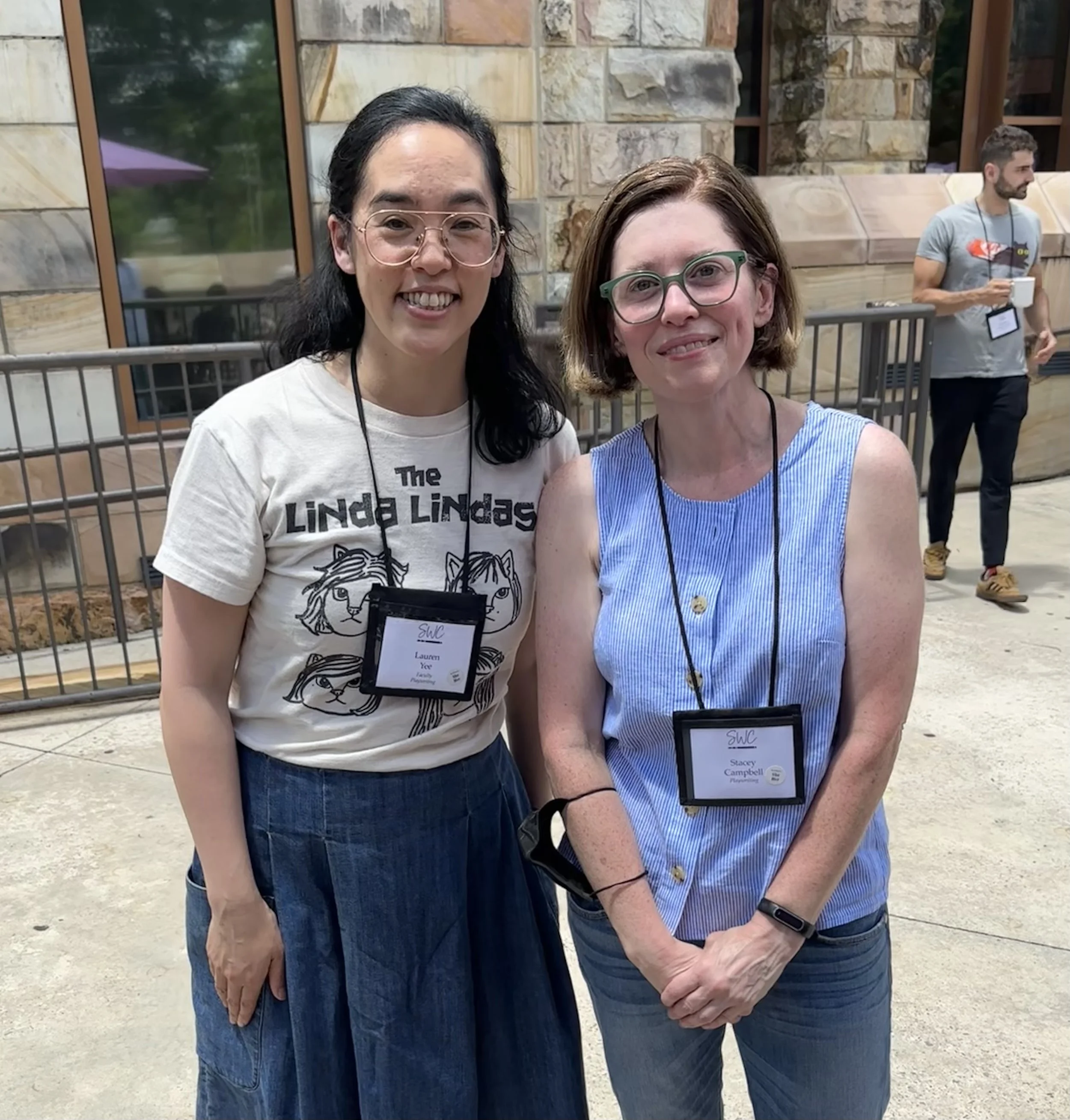
Lauren Yee and me, “looking too cool for school” (to quote Winter Miller). The reading of her play Mother Russia was amazing!
What I'll carry most from these two weeks isn't any single note on my play or any single conversation, though there were many that mattered. It's the feeling of being in a room full of people who are trying to make things that matter — not for money, not for fame, but because they can't seem to stop themselves. In a career that asks a lot and promises very little, that feeling is everything.
The Longest Walk goes into a developmental workshop and reading this fall that I can’t announce yet. More on that soon!
With gratitude to the Sewanee Writers' Conference and the Metropolitan Arts Council of Greenville, SC.
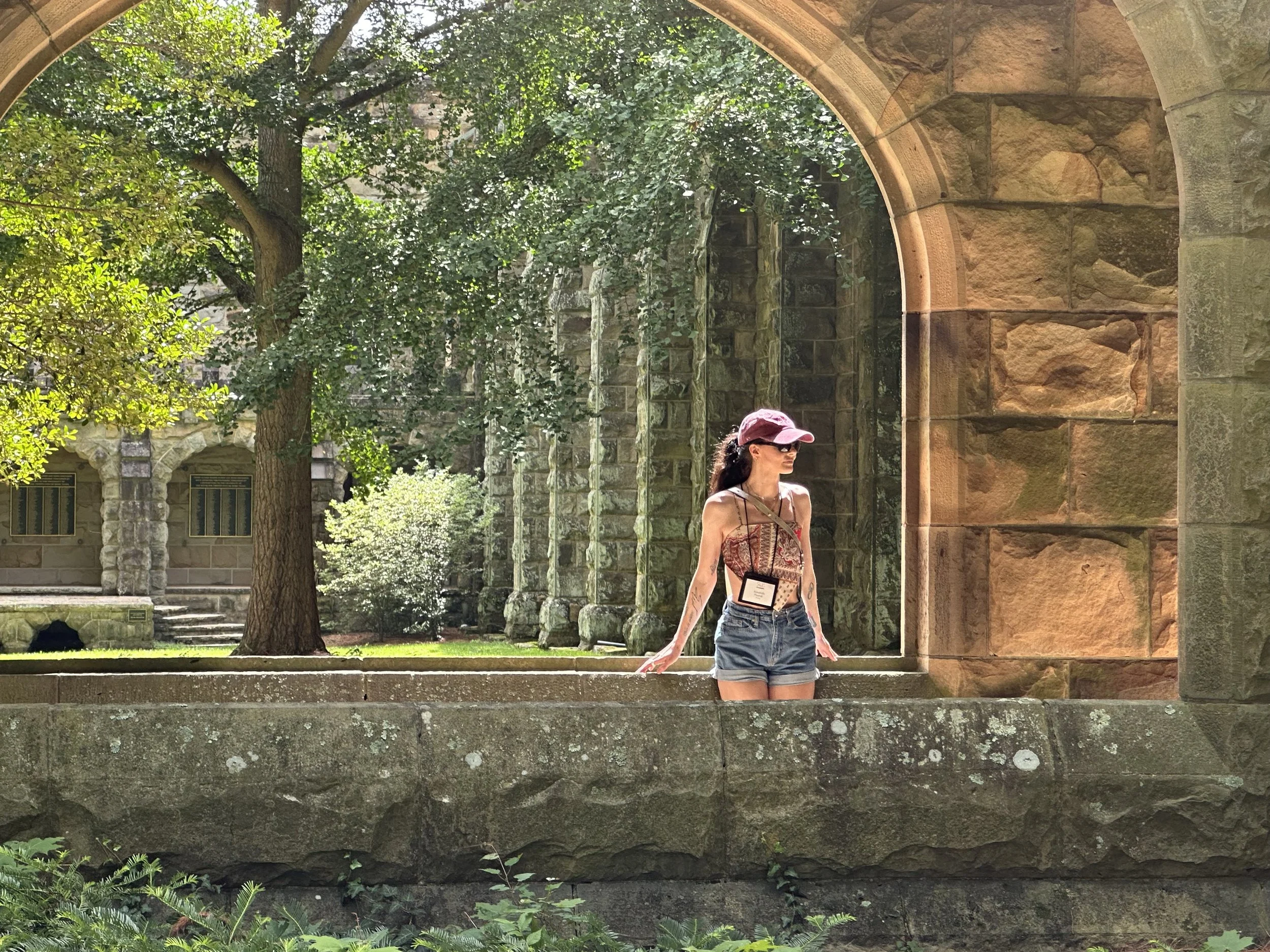
From my writing and photography class
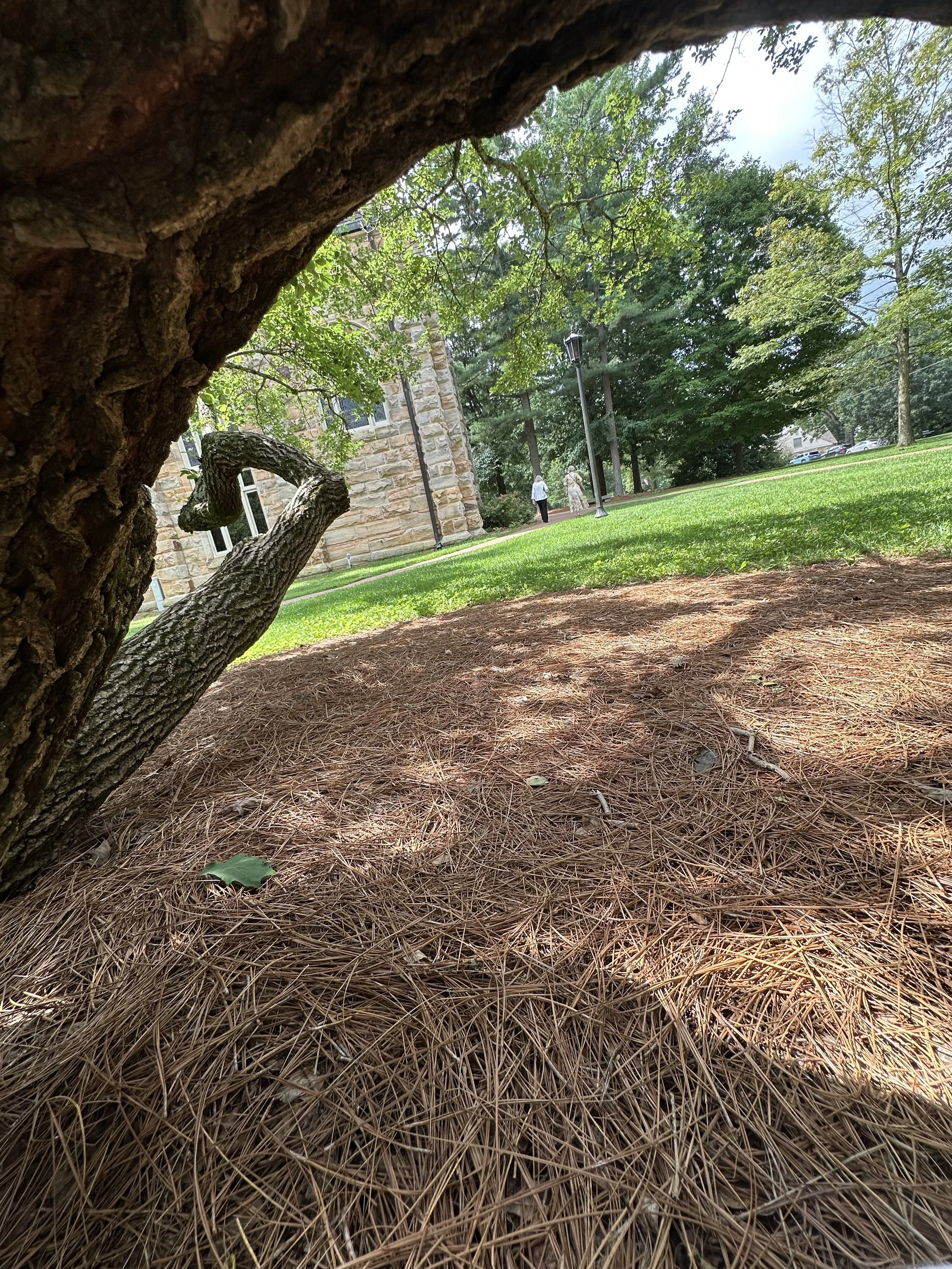
These gorgeous old trees everywhere
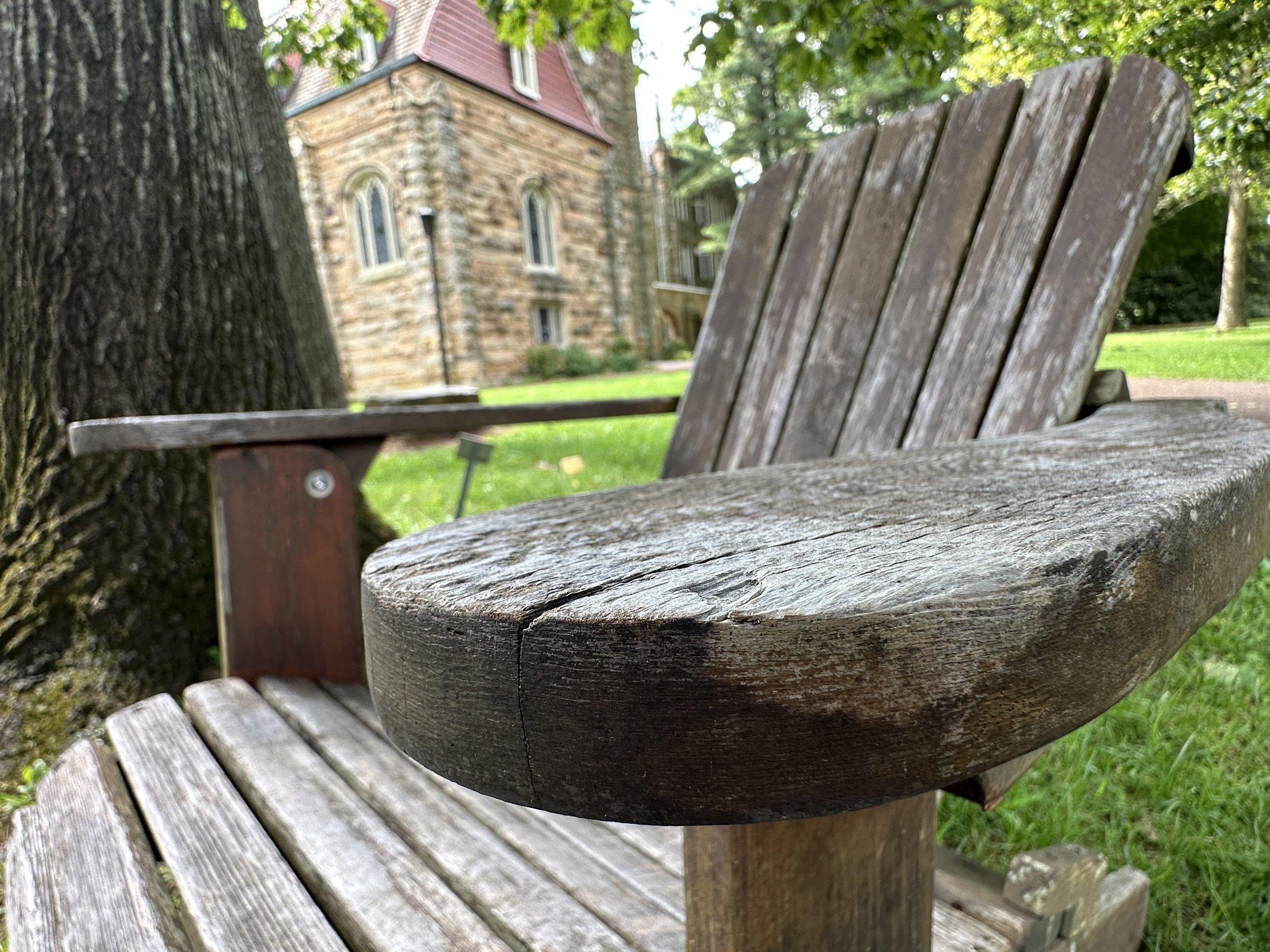
Southern hospitality